
Think about it: You are a student, it’s the middle of class, and you have to use the restroom. The problem is that there are only two all-gender restrooms for students on campus – each with only one stall – and they are a 10-15 minute walk away from your classroom. There are a few other all-gender restrooms nearby, but they are all marked “STAFF” and mostly always locked. You have three options:
1. You leave class to use the student restroom, knowing that you will miss nearly 30 minutes of your 80-minute class, but you are more likely to be able to use that restroom and get in and out quickly with little issue.
2. You go to the nearest all-gender restroom designated “STAFF”, and hope that it is open and that no one says anything to you, or that an employee you know is around and would be willing to unlock it for you and sneak you in.
3. You wait it out, though you aren’t able to focus much in class due to your discomfort and worry that the student restroom won’t be available when all classes get out and there is heavy traffic.
What do you do?
1. Ensure compliance with Title IX and AB1732 regarding gender affirming restrooms.
Ensure compliance with Title IX by passing and making visible campus policy that students can use the restroom that most aligns with their gender.

(Photo by Rachel Folland, 2014)
Ensure compliance with AB1732 (2016) by converting all single stall restrooms to all gender restrooms. It is also a good idea to map those restrooms and have them easily accessible on physical or virtual maps.
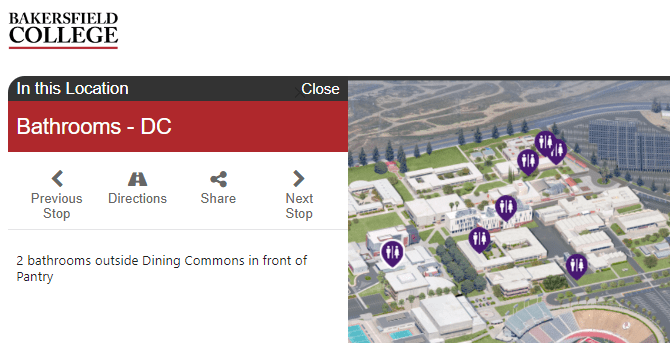
(Bakersfield Community College, 2024)
The following information should be included regarding each restroom so that students, as well as employees and community members, can determine which will be the best restroom for them to use:
- Building
- Floor
- What it is nearest to (especially in the case where it is a little hard to find)
- How many stalls? How many urinals?
- Does the restroom lock internally?
- How many wheelchair accessible stalls? How many stalls with grip bars?
- Is the restroom accessible from outside or is it within a building?
- Is there a changing table?
- Is there a safe needle disposal?
- Are there outlets?
- Are pads and tampons available?
Pads and tampons – along with their receptacles – should be included in ALL restrooms – whether they are labeled Women, Men, All Gender, etc. People of all genders can menstruate, so it is important that they are available in all restrooms.
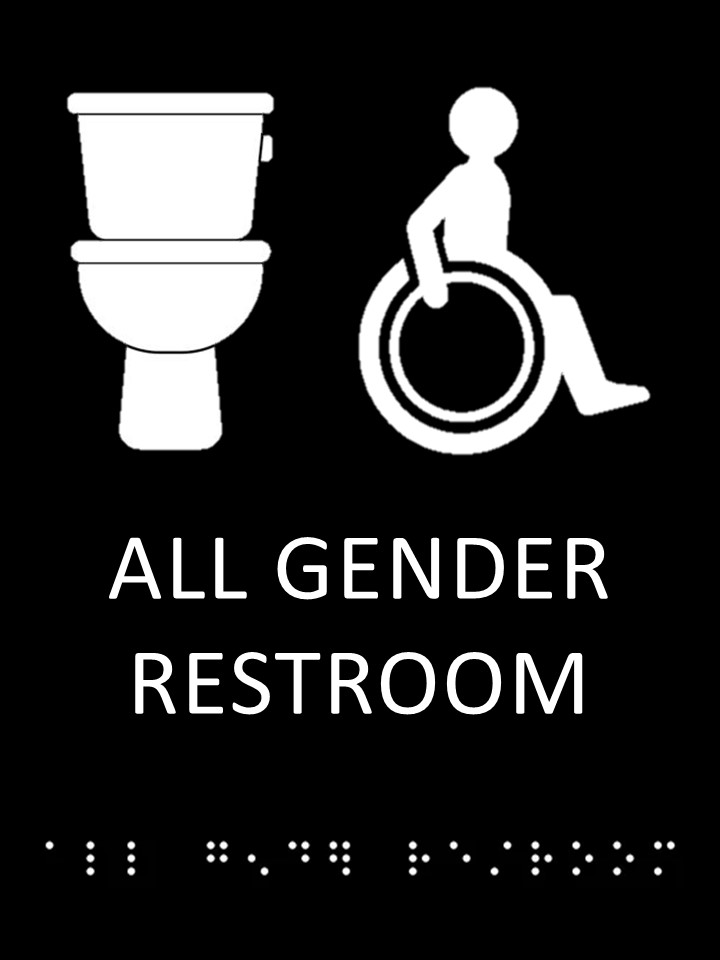
Example Signage for All Gender Restrooms
Example Signage to Put Next To Single Gender Restrooms

2. Work with Facilities regarding the possibility of converting additional restrooms into all gender restrooms, staying in compliance with plumbing code.
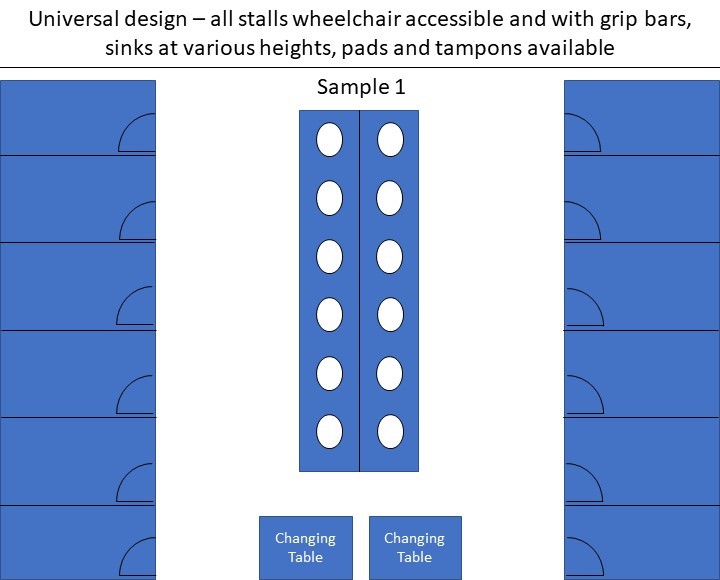
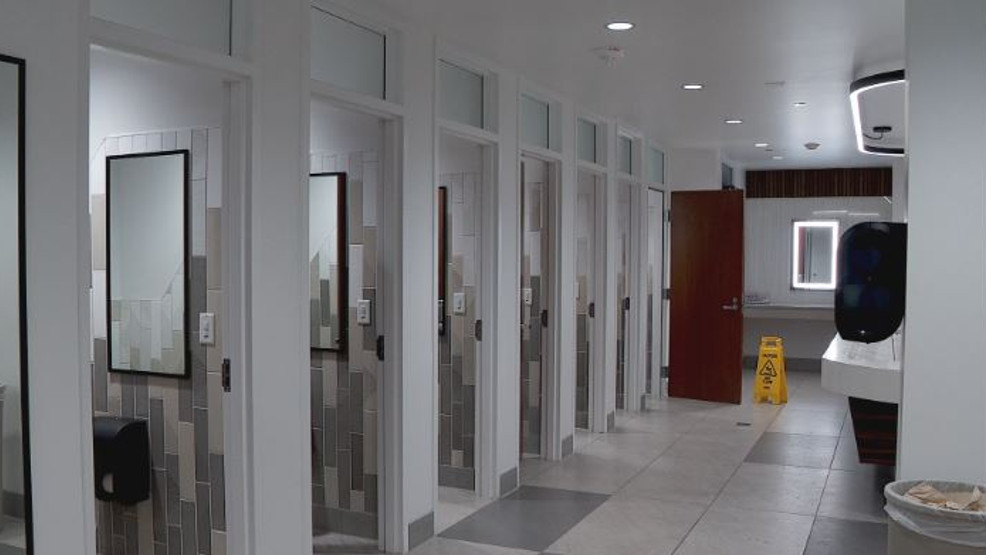
The best practice for this is to have one main door, a row of sinks and mirrors at varying heights, and floor-to-ceiling, fully enclosed, individually locking, wheelchair accessible stalls with grip bars. Also look into conversions or additions of all-gender locker room facilities.

3. Write a policy to ensure increased all gender restrooms and locker rooms, and advocate to the Board of Trustees to pass said policy.
This would include that in all new builds and major renovations, at least one all-gender restroom is installed per floor, including both multi-stall restrooms and single-user restrooms. Further, where men’s and women’s locker rooms are located, there should also be all gender locker room facilities, complete with lockers, toilets, sinks, showers, and any other features present in the sex-specific locker rooms. All toilets and showers should be private, lockable, wheelchair accessible, and with floor-to-ceiling walls and grip bars. These should be accessible to all students for fitness and general hygiene.
Did you know?
If given the option, cisgender people would also prefer more private shower spaces in locker rooms! (Bloyd, 2009; Inpro, 2016; Steinbach, 2017)
Did you know?
SB1194 (2021) opened up the possibility of updates to California Plumbing Code to allow all-gender single-stall and multi-stall restrooms in place of sex-specific facilities. The California Building Standards Commission is currently working with the Division of the State Architect to update Plumbing Code.
Relevant Research
Trans students have listed gender inclusive restrooms as the most important trans-inclusive policy or practice to them (Goldberg et al., 2019).
24% of trans college students reported being denied use of a restroom, with disproportionate rates experienced by people of color and people with disabilities (Seelman, 2014).
Nearly 1/3 of trans people limit their consumption of food and beverage to stave off restroom use, and 59% avoid public restrooms altogether (James et al., 2016).
SB 1194 (2022): Public Restrooms, Building Standards
– Legislative Information
– Senate Committee on Housing, Hearing Notes
2023 Presentation about California Plumbing Code as it Relates to All Gender Restrooms
 TRANScend Toolkit