
Did you know? As of the 2023-2024 CCCCO LGBTQ+ Programs Report, only 27 California Community Colleges have a dedicated LGBTQ+ center, and 23 have a shared center.
1. Reserve a temporary location(s).
Reserve a room or rotate rooms on campus for temporary LGBTQIA2+ center, and ask employees to volunteer 1+ hour per week to staff the space. In that space, you could hold events, run a trans-focused discussion or support group, in addition to space to study, hang out, etc.
2. Advocate for a permanent center.
Advocate for a permanent center. This might be established directly through Facilities, at the Request of the President, through an annual Funding Prioritization process, or from a Board of Trustees Resolution. Once a center is established, conduct surveys and focus groups for the name of the center, how students will utilize the center and what they need from it, the “vibe” of the center through décor, etc. Use that to create intentional, student-centered space.
Centers MUST be intersectional – accessible to students with any disability, multi-culturally affirming in food, decor, programming, addressing micro and macroaggressions as they occur, hiring diverse staff and training them in cultural respect, cultural humility, and trauma-informed practice.

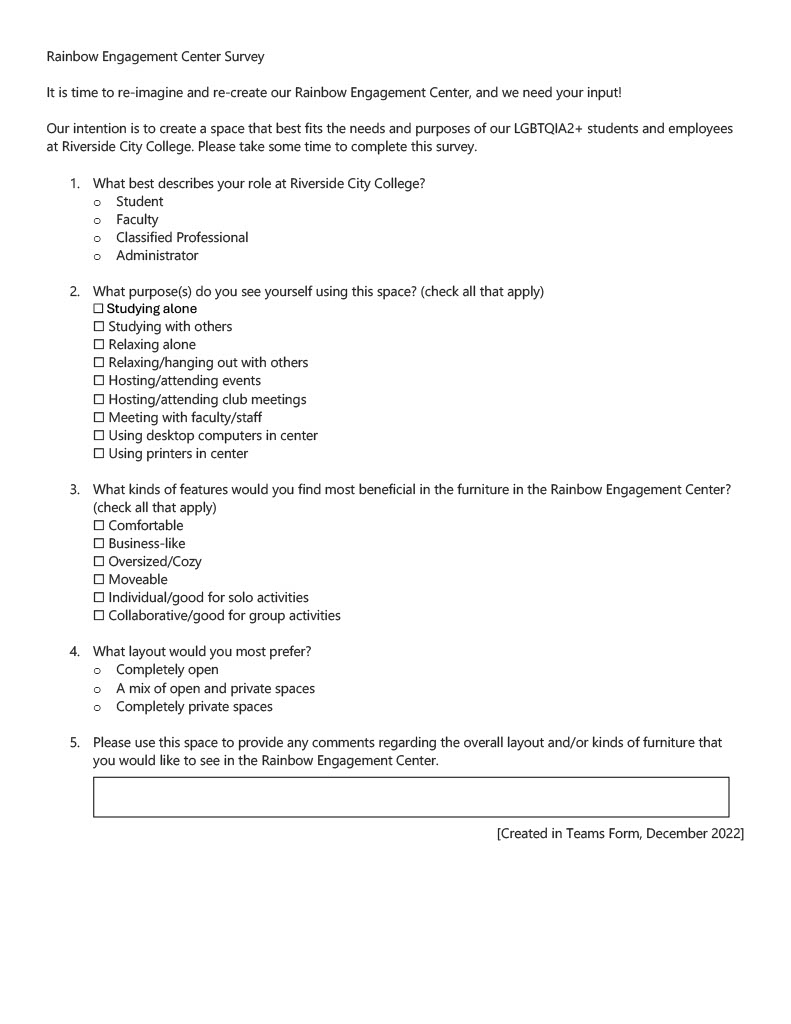
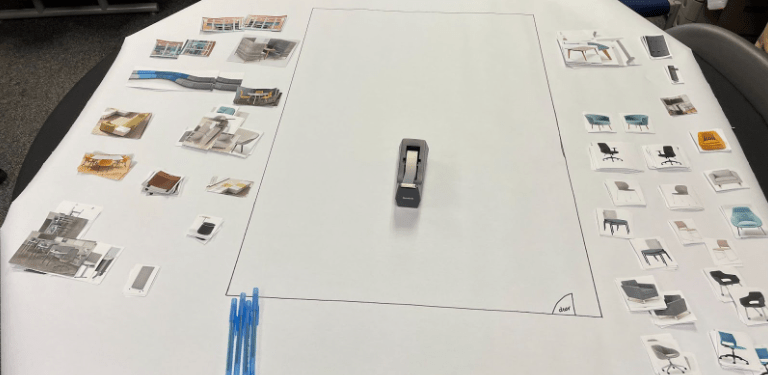
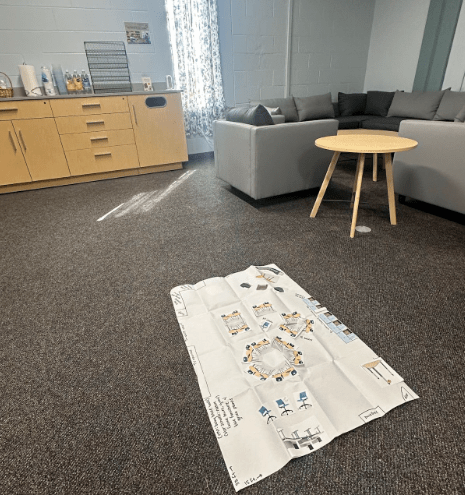
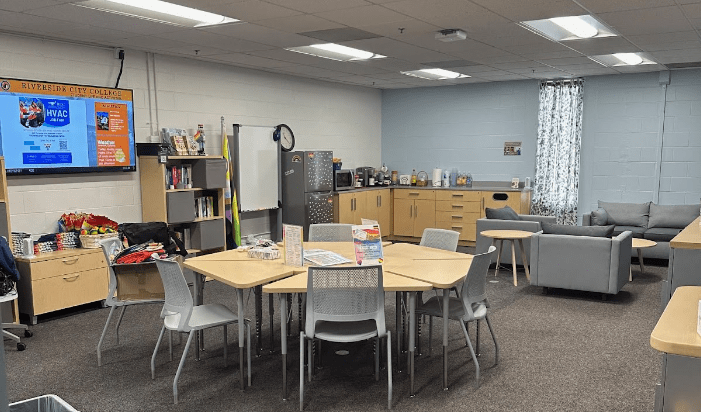
A campus LGBTQ+ Center could have many functions and roles, including but not limited to a space to:
- Study
- Hang out
- Meet with faculty for “office hours”, tutors, and/or peer mentors
- Hold workshops and events
- Host club meetings
Within them, centers might offer:
- Snacks and light meals
- Pamphlets, brochures, resource guides
- Computers and free printing
- Mini library
- Educational supplies (notebooks, pens, pencils, highlighters, index cards, paper, binders, folders, etc.)
- Art supplies, jewelry and button making kits, coloring books, etc. – creativity through art is healing!
- Safer sex supplies
- Menstrual products
- Information about and access to binders, breast inserts, stand-to-pee devices, and packing and tucking supplies
- Clothes closet, where students can donate old clothes and/or pick up gender-affirming clothes for free
- Lockers, where students can store gender-affirming clothing and accessories if they cannot be stored safely outside of campus
Did you know? City College of San Francisco was the first to establish a campus LGBTQ+ center, called the Queer Resource Center, in 2005.
https://cccqsummit.blogspot.com/p/milestones.html
3. Advocate for permanent staffing.
There are currently 48 California Community Colleges who have employees dedicated to serving LGBTQ+ students. However, it is unknown how many of these are part-time or full-time, and whether they are administrators, classified professionals, faculty, or student employees. Given that the state funding alone is not enough to fund permanent employees, it is likely that many of these employees are part-time student employees, managed by employees through other departments who volunteer to coordinate LGBTQIA2+ student services.
Minimal levels of staffing should include the following full-time, permanent positions:
- a counselor/coordinator/director who can manage the day-to-day operations and meet with students to academic and personal support
- an educational advisor/program coordinator to supplement the direct support to students as well as plan and implement workshops and events
- an administrative assistant for general administrative work related to greeting students, answering phones/emails, processing paperwork, copy/print, ordering supplies, etc.
Additional staff could include student/peer interns, graduate assistants, a trans-specific resource navigator.
Relevant Research
Transgender community college students are less likely to engage in extra-curricular aspects of campus life, possibly due to the commuter nature of community colleges as well as fewer LGBTQIA2+ campus centers and clubs to get involved with (Goldberg et al., 2020).
Even if LGBTQIA2+-specific spaces are available, trans and non-binary students can feel marginalized and lack belonging, especially in predominately cisgender queer spaces (Goldberg & Kuvalanka, 2018). Trans BIPOC feel further excluded when campus centers are not multicultural in their physical space, events, participants, etc.
An unwelcome campus environment and lack of trans-affirming support was another core factor in trans students’ decision to leave college (Goldberg et al., 2019b; Grant et al., 2011).
 TRANScend Toolkit